
1971 Half Dollar Prices: Know Before You Sell
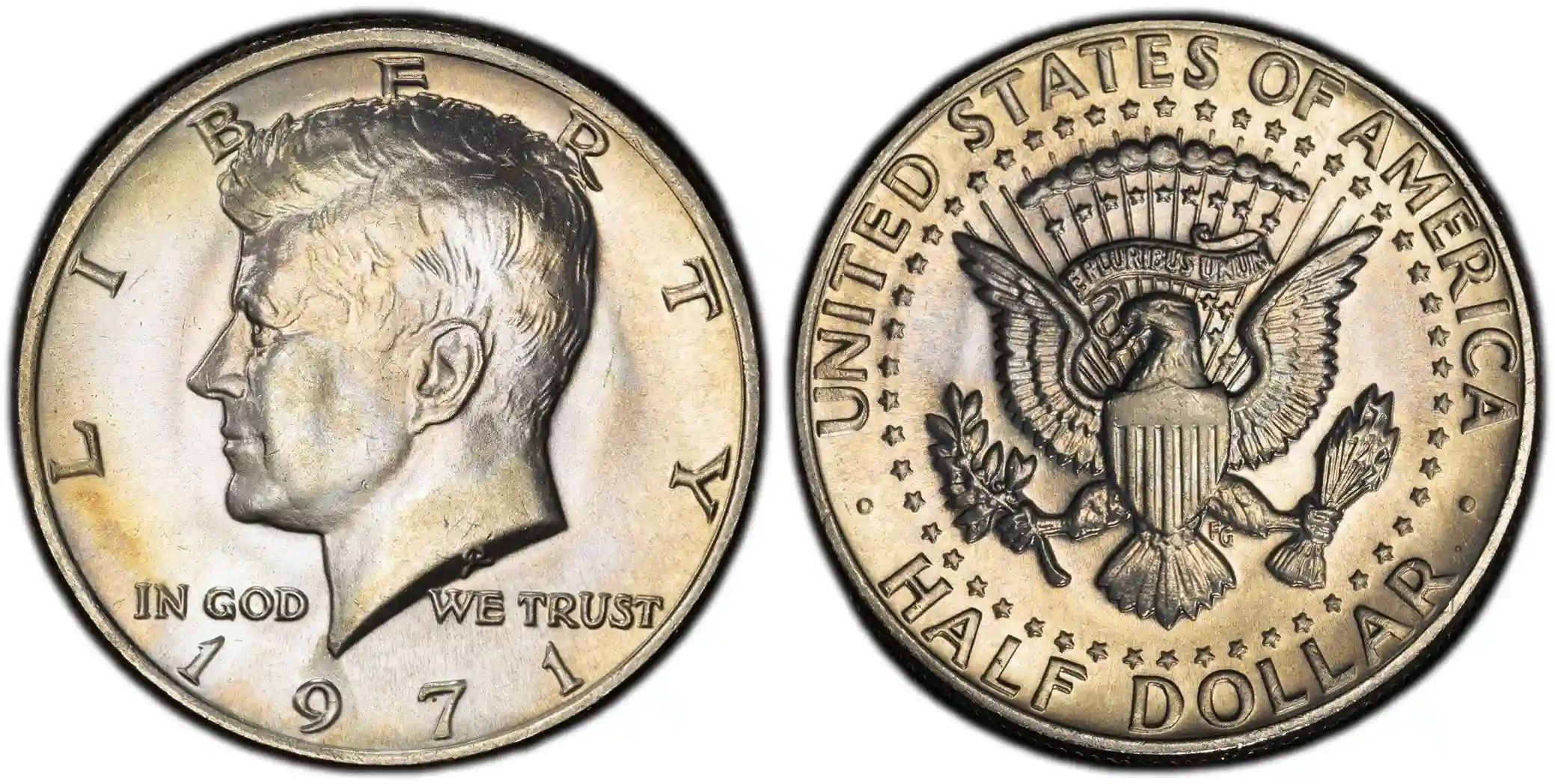
The year 1971 was the year the silver period officially ended for the Kennedy Half Dollar. After the year, usher in the age of the copper-nickel clad composition. Nowadays, the numismatic market has revealed a surprising reality: most of these coins are worth exactly fifty cents, but a select few pieces are shattering records.
As high-end registry set collectors battle for the finest known pieces, prices for top-tier 1971 halves have climbed to heights previously reserved for much older coinage. If you have one, you should understand the difference between an ordinary issue and an auction star is essential before you head to a dealer.
Why 1971 Changed Everything for the Kennedy Series
To understand the 1971 Kennedy Half Dollar value, one must look back to the Coinage Act of 1965. Quarters and dimes saw their silver removed immediately; the Kennedy Half Dollar was granted a reprieve and maintained a 40 % silver composition from 1965 through 1970.
By 1971, rising silver prices and the need for a unified clad system led the Mint to finally remove all silver from circulation strikes. This transition turned the half dollar into a coin with layers – an inner core of pure copper bonded to outer layers of copper and nickel.
This change was a logistical necessity, but it created a fascinating era for numismatists: the hunt for transitional errors and the rare survivors that managed to stay in high condition despite the harder, more abrasive clad surfaces.
Item Specifications
Item composition is a copper and nickel mix. For more insights, use the coin value checker free.
Weight | 11.34 grams |
Diameter | 30.60 mm |
Edge | Reeded |
Production Volume and Mintage Figures
Because 1971 was the first year of the new composition, the Mint went into overdrive to ensure the transition was successful. The resulting mintage figures are enormous, which is why these coins remain common in change today:
Philadelphia No Mint Mark – mintage is 155,164,000 pieces
Denver D – mintage is 302,097,424 pieces
San Francisco S Proofs – mintage is 3,220,733 pieces
These figures tell a story of abundance, but they also highlight why high-grade pieces are so valuable. With nearly half a billion coins struck, the machinery was worked hard, and dies often deteriorated.
1971 Half Dollar Value Chart
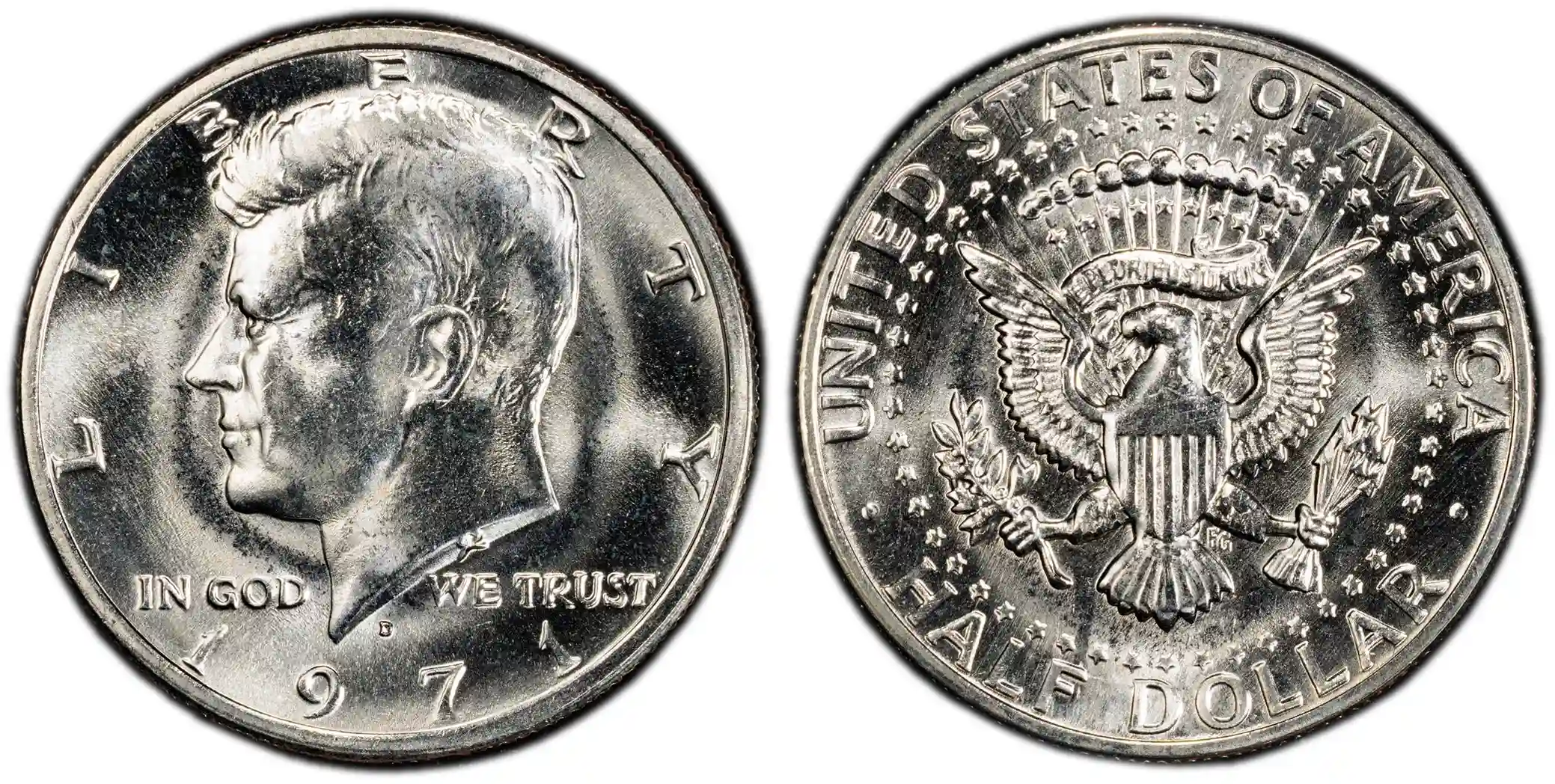
Most Philadelphia-minted 1971 halves found in jars or registers are worth exactly $0.50. Even those with a slight shine but visible scratches rarely fetch a bonus.
Grade | Value |
MS-63 to MS-65 | $5–$30 |
MS-66 | $150–$400 |
MS-67 | $2,500 to $4,000 in auction |
Denver D Mint Valuation
Despite having a much higher mintage than Philadelphia, Denver-minted 1971 halves are the current darlings of the high-end market.
MS-67+ and MS-68 are the registry set pieces. In recent sales, a 1971-D in MS-67+ has reached $13,000+. What is the numismatic reason? Denver strikes are generally sharper, but finding one without a single microscopic scratch from colliding with other coins is nearly impossible.
San Francisco S Proof Valuation
Proof coins were made specifically for collectors using polished blanks and dies.
Standard Proof $2–$5
Cameo $10–$25
Deep Cameo (DCAM) coins have a heavy, frosty portrait against clear fields. A PR-70 DCAM is the goal here, often valued at $500 to $1,000.
The Top Coins
In numismatics, the difference between an MS-66 and an MS-67 is often invisible to the collector’s eye, requiring magnification to see. Yet, in the market, that single point represents a $3,000 to $10,000 price gap.
This condition rarity exists because thousands of collectors are trying to build the top 1 set in the world. They will pay a massive bonus for the best to beat their competition by a fraction of a grade point.
The Importance of Eye Appeal and Original Luster
Beyond the technical grade, "eye appeal" dominates 2026 bidding. A 1971 Half Dollar with original mint luster is highly prized. Furthermore, while clad coins don't have a rainbow tone like silver, those with a light golden or soft blue patina are currently outperforming brilliant white coins that may have been dipped in cleaning chemicals.
Half Dollar Errors and Varieties to Look For
Several defects you should know before buying or selling the item. Below is a list of the errors. You should find the full list in the coin checker.
The 40 % Silver Transitional Error – the $10,000 Find
In 1970, the Mint was still striking 40 % silver halves. It is documented that a few silver planchets were left in the hoppers and struck with 1971-D dies. For clear identification, coins look slightly whiter than clad coins and do not have the copper stripe on the edge.
Value exceeds $10,000 at auction
Missing Designer Initials
On the reverse, near the eagle’s right leg, should be the initials "FG" for Frank Gasparro. Sometimes, grease would fill the die, or the die would be over-polished, erasing these initials.
Value $50 to $400
Clipped Planchets and Quarter Stock
When the coin blank is cut from the end of a metal strip, resulting in a little piece is taken out of the edge. Some 1971 halves were accidentally struck on metal intended for quarters. These are thinner and weigh only 8.8 grams instead of the standard 11.3 grams.
Value $150–$400
Doubled Die Obverse & Reverse
There are several doubling varieties for this year. The most sought-after show a clear doubling in the words "TRUST" or "IN GOD WE TRUST" and on the stars. Use a loupe to look for split serifs or shadow images on the lettering.
Value $10–$500
Where to Sell Your 1971 Half Dollar in 2026
If you have a common circulated 1971 Kennedy, a local coin shop is the best place for a quick sale. If you believe you have an MS-67 or a Silver Error, Heritage Auctions or GreatCollections are the only way to reach the high-end buyers who drive prices into the thousands.
The Cost of Professional Grading: PCGS & NGC
Is it worth it?
If the coin has any scratches or looks like it has been in daily use: No. You will spend $40 to grade a $0.50 coin. If the coin is flawless, mirror-bright, and looks like it just popped out of a Mint bag: Yes. The slab from PCGS or NGC is the only way to prove a coin is high-grade enough to command top prices.
Recent post
-
 Top Destinations for Cheap Travel in 2023 Explore the most affordable travel destinations for 2023 with VoyageVista. Discover budget-friendly tips and hidden gems in Laos, Thailand, India, Mexico, Costa Rica, the Baltic States, Romania, Moroc...
 -
 Best Foods for Camping Embark on your next camping trip prepared and inspired with our ultimate guide to camping cuisine. Discover the best foods to pack for freshness, flavor, and convenience, plus eco-friendly tips for a ...
 -
 Family Camping: A Journey Into Nature Discover the best family camping activities with Voyage Vista! From nature hikes and water sports to star gazing and creative arts, our guide offers fun and educational experiences perfect for your ne...
 -
 Essential Travel Tips For First-Time Solo Travelers: Staying Safe And Confident Discover essential travel tips for first-time solo travelers with VoyageVista. Learn how to stay safe, boost your confidence, and prepare effectively for a rewarding solo adventure. Explore expert adv...
 -
 How To Use Plant Identification Apps For Nature Trails And Hiking Adventures Discover how plant identification apps can enhance your nature trails and hiking adventures. Learn tips for using these apps effectively, ethical considerations, and expert insights. Explore the natur...